 info@slec.edu.in
 91 818181 6735
To provide strong foundational knowledge in Electronics, Communication Systems, Signal Processing, VLSI Design, Embedded Systems, Microwave Engineering, and Emerging Technologies through outcome-based education.

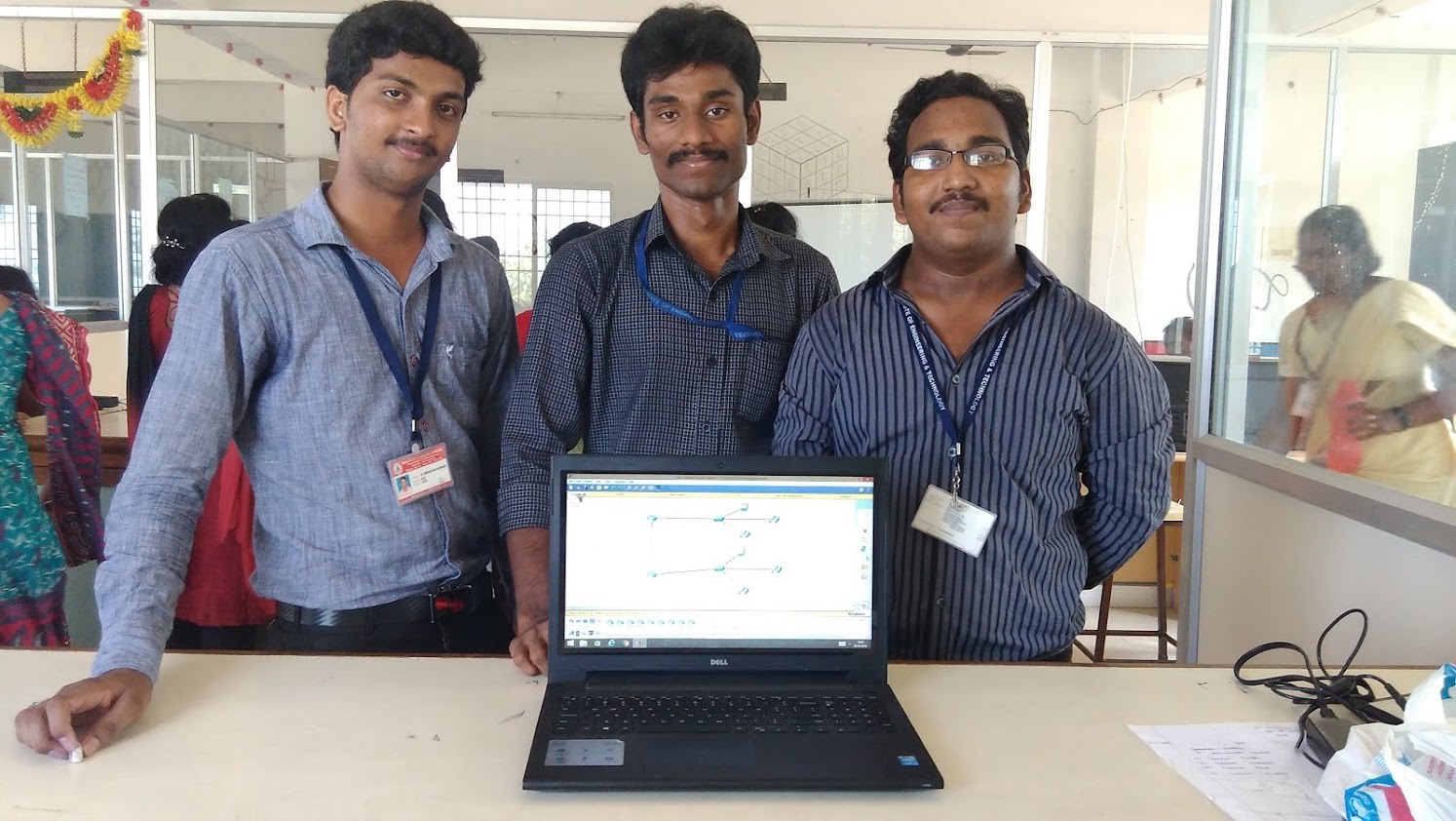
The Department of Electronics and Communication Engineering at St.Lourdes Engineering College was established in the year 2009 with an intake of 30, it increased to 60 in the year academic year 2025. The program is duly approved by AICTE and affiliated to Anna University. Electronics and Communication Engineering department is most attractive and preferred department to the student’s community. The young and dynamic department aspires to achieve global standards and competence with the untiring commitment of budding Engineering. The laboratory practical classes are conducted in systematic manner. The laboratories are well equipped with modern training facilities that cater to the requirements of the University syllabus as well as to architect the learning experience. Problems are solved during the tutorial hours with better clarity. Students are taken for Industrial visits twice per semester. The students are encouraged to deliver seminars, publish papers in both National / International Conferences in latest topics, thus promoting technical and communication skills.
The Department of Electronics and Communication Engineering is committed to achieving academic excellence through quality education, research, and industry interaction. The primary objectives of the department are:
To provide strong foundational knowledge in Electronics, Communication Systems, Signal Processing, VLSI Design, Embedded Systems, Microwave Engineering, and Emerging Technologies through outcome-based education.
To equip students with practical skills through well-structured laboratory courses, industry- supported training programs, internships, and project-based learning aligned with curriculum objectives.
To promote research culture among faculty and students by encouraging funded projects, publications in reputed journals, patents, consultancy, and interdisciplinary collaboration in thrust areas.
To strengthen academia–industry interaction through MoUs, industrial visits, guest lectures, workshops, and value-added certification programs to enhance employability.
To effectively implement Outcome-Based Education practices in alignment with Program Outcomes (POs), Program Specific Outcomes (PSOs), and Course Outcomes (COs) as prescribed by NBA guidelines.
To inculcate ethical values, leadership qualities, teamwork, environmental consciousness, and social responsibility among students.
To encourage students to pursue higher education, research, entrepreneurship, and continuous professional development.
PO 1 : Engineering knowledge: Apply the knowledge of mathematics, science, engineering fundamentals, and an engineering specialization to the solution of complex engineering problems.
PO 2 : Problem analysis: Identify, formulate, review research literature, and analyse complex engineering problems reaching substantiated conclusions using first principles of mathematics, natural sciences and engineering sciences.
PO 3 : Design/development of solutions: Design solutions for complex engineering problems and design system components or processes that meet the specified needs with appropriate consideration for the public health and safety, and the cultural, societal, and environmental considerations.
PO 4 : Conduct investigations of complex problems: Use research-based knowledge and research methods including design of experiments, analysis and interpretation of data, and synthesis of the information to provide valid conclusions.
PO 5 : Modern tool usage: Create, select, and apply appropriate techniques, resources, and modern engineering and IT tools including prediction and modelling to complex engineering activities with an understanding of the limitations.
PO 6 : The engineer and society: Apply reasoning informed by the contextual knowledge to assess societal, health, safety, legal and cultural issues and the consequent responsibilities relevant to the professional engineering practice.
PO 7: Environment and sustainability: Understand the impact of the professional engineering solutions in societal and environmental contexts, and demonstrate the knowledge of, and need for sustainable development.
PO 8 : Ethics: Apply ethical principles and committees’ professional ethics and responsibilities and norms of the engineering practice.
PO 9 : Individual and team work: Function effectively as an individual, and as a member or leader in diverse teams, and in multidisciplinary settings.
PO 10 : Communication: Communicate effectively on complex engineering activities with the engineering community and with society at large, such as, being able to comprehend and write effective reports and design documentation, make effective presentations, and give and receive clear instructions.
PO 11 : Project management and finance: Demonstrate Knowledge and understanding of engineering and management principles and apply these to one’s own work, as a member and leader in a team, to manage projects and in multidisciplinary environments.
PO 12 : Lifelong learning: Recognize the need for and have the preparation and ability to engage in independent and life-long learning in the broadcast context of technological change.
The B.E. Electronics and Communication Engineering (ECE) programme at St. Lourdes Engineering College opens diverse career opportunities across core electronics industries, communication sectors, IT companies, research organizations, and entrepreneurial ventures. Graduates can pursue roles in semiconductor companies, telecom industries, embedded system firms, public sector undertakings, and software organizations.
The Department of Electronics and Communication Engineering at St. Lourdes Engineering College offers various value-added courses to enhance student competencies beyond the regular curriculum. These courses are designed to strengthen technical expertise, improve employability skills, and ensure industry readiness in core and emerging domains.
The key value-added courses include:
©️ 2026 ST. Lourdes Engineering College. All Right Reserved. Designed & Developed by
 Innov Touch Technologies Pvt Ltd.